
This (Trans) Therapist Is Begging You to Divest From the "Trans Doom Clickbait Economy"

Trans people in America right now are facing a federal government that is unabashed in its animosity toward us. Our safety as a community has been degraded significantly by the rise of MAGA anti-trans politicians and policies and the increased normalization and validation of violent hatred toward us. Our access to respectful treatment and healthcare has been jeopardized. Both safety threats and barriers to healthcare and affirmation access are worse depending on where you live and which part(s) of the trans community you belong to; and also there isn’t a trans person in the U.S. who hasn’t been touched to some degree by the existential and material impacts of the rise of anti-trans ideology and violence.
We are scared and we are hurting. And a lot of cis people don’t seem to have noticed much. Before the election, the valid threats of a potential Trump administration to trans people were dismissed by a lot of people. Major escalations against our community rarely make headlines in mainstream news. Right wingers with a lot of power can say something horrid about trans people or do something horrid to trans people that should stop everyone in their tracks, and most of our friends and family will continue to post memes about needing vacation. Most of the complaints I see about the Trump administration and MAGA state governments leave out the attacks on trans people, even as these make up a huge part of their political efforts. We have been told for years that we are overreacting to how bad the state of trans rights and trans life has gotten.
It is in this environment that an exploitative ecosystem of misinformation about threats to trans people has developed. I use the term exploitative because it uses trans people’s very understandable fear and rage and alienation to generate gain for non-trans people (generally the billionaire tech class and those who aspire to be them). And it manipulates our attention to be a tool. I am so angry about this. I am also really concerned about it because it is leading to very real issues with psychological wellbeing and capacity to engage in meaningful resistance.
But I’m getting ahead of myself. Let’s get into what I’m talking about. What is this ecosystem of misinformation?
By the way, this piece is long. I’ve spent hours stretched across weeks working on this. Substack tells me it will take you about 35 minutes to read the whole thing and 50 to listen to it. I realize I’m biased as the author but I do think what I get into here is important and worth the time.
With increasing frequency and severity, I am hearing from clients and friends how they are suffering distress and panic due to extreme interpretations of current policy and news items as though they are facts.
I recently read a very compelling and important Substack article from Garrison Davis1 critically analyzing the online ecosystem of news commentary promoting the fear that there is “imminent doom” for American trans people. Davis is co-host of the podcast It Could Happen Here, which engages seriously with various doomsday predictions/possibilities. In their post titled “The Trans Panic Clickbait Economy,” Davis uses the example of viral claims about ICE targeting suspected trans people to highlight how disinformation is spreading through trans communities and the harm it is doing.
This is all highly relevant to my work as a psychologist and psychotherapist with a focus on helping trans people withstand the oppression of this era. With increasing frequency and severity, I am hearing from clients and friends how they are suffering distress and panic due to extreme interpretations of current policy and news items as though they are facts. People are becoming immobilized and otherwise shaped by how they feel about the state of things for trans folks, not realizing they are being influenced by a system that is incentivized to spread the most panic-inducing version of events.
Let me be clear: This is not an article about how trans people are overreacting. This is an article about how trans people are sometimes reacting understandably to information that is inaccurate and designed to elicit panic. This is an article about how harmful that is to the trans individuals experiencing this panic, to our communities at large, and to others who need our help. And this is an article about how to divest from this ecosystem of misinformation.
Table of Contents
What is the Trans Doom Clickbait Economy?
I’m going to summarize the most relevant parts of Davis’ piece, but if you are interested in getting into more holistically and engaging with Davis’ work itself, they have both a substack post and a podcast episode about it. Note that I’ve shifted the language away from Trans Panic Clickbait Economy due to the violent and traumatic associations with the trans panic defense.
The Trans Doom Clickbait Economy is an incentivized ecosystem in which panic-inducing and panic-driven stories about trans people get amplified because fear and outrage drive engagement. Writers and aggregators earn attention, status, and revenue. This also generates revenue for the platforms whose algorithms will reward not only the original fear and rage inducing content, but the emotionally charged posts responding to this content. This creates a feedback loop that incentivizes ever-more sensational claims. There is also the very present element of genuine concern for community and the motivation to care for and protect each other, while engaging in what feels like activism, by sharing these stories, memes, etc. [I’ll to refer to the Trans Doom Clickbait Economy as the TDCE in this article.]
Trans internet is trapped in a state of catastrophic fear. This is maintained by a near constant wave of articles that flood the zone with panic-inducing headlines, which then fuel social media posts that further escalate and abstract the claims made in headlines to a Nazi Germany-esque level of potential danger facing trans people. -Garrison Davis
To illustrate how this all works, Davis used the example of a viral (not accurate) story about ICE being given the green light to detain people they suspect of being trans. (But there are many more examples, because this is a fully functioning ecosystem now.) Davis tracks how two pieces of news (that the State Department instituted newish rules that require visa applicants report their sex as their sex assigned at birth and the 2025 Supreme Court ruling in which Justice Kavanaugh wrote that ICE can detain someone for questioning “if they have a reasonable suspicion, based on specific articulable facts, that the person being questioned . . . is an alien illegally in the United States”) were merged by a single Substack author, using some leaps of logic and misinterpretation of state policy to claim that the Trump Administration had given the State Department grounds to declare trans people’s visas fraudulent and revoke them, and that this meant that ICE could detain someone for (suspected) transness. Davis notes how this Substack post full of misinterpretation and speculation was treated as actual verified news and spread through (mostly trans) social media, where discourse included claims that ICE was going to “deport” or “disappear” trans U.S. citizens, making a lot of trans people understandably really scared.
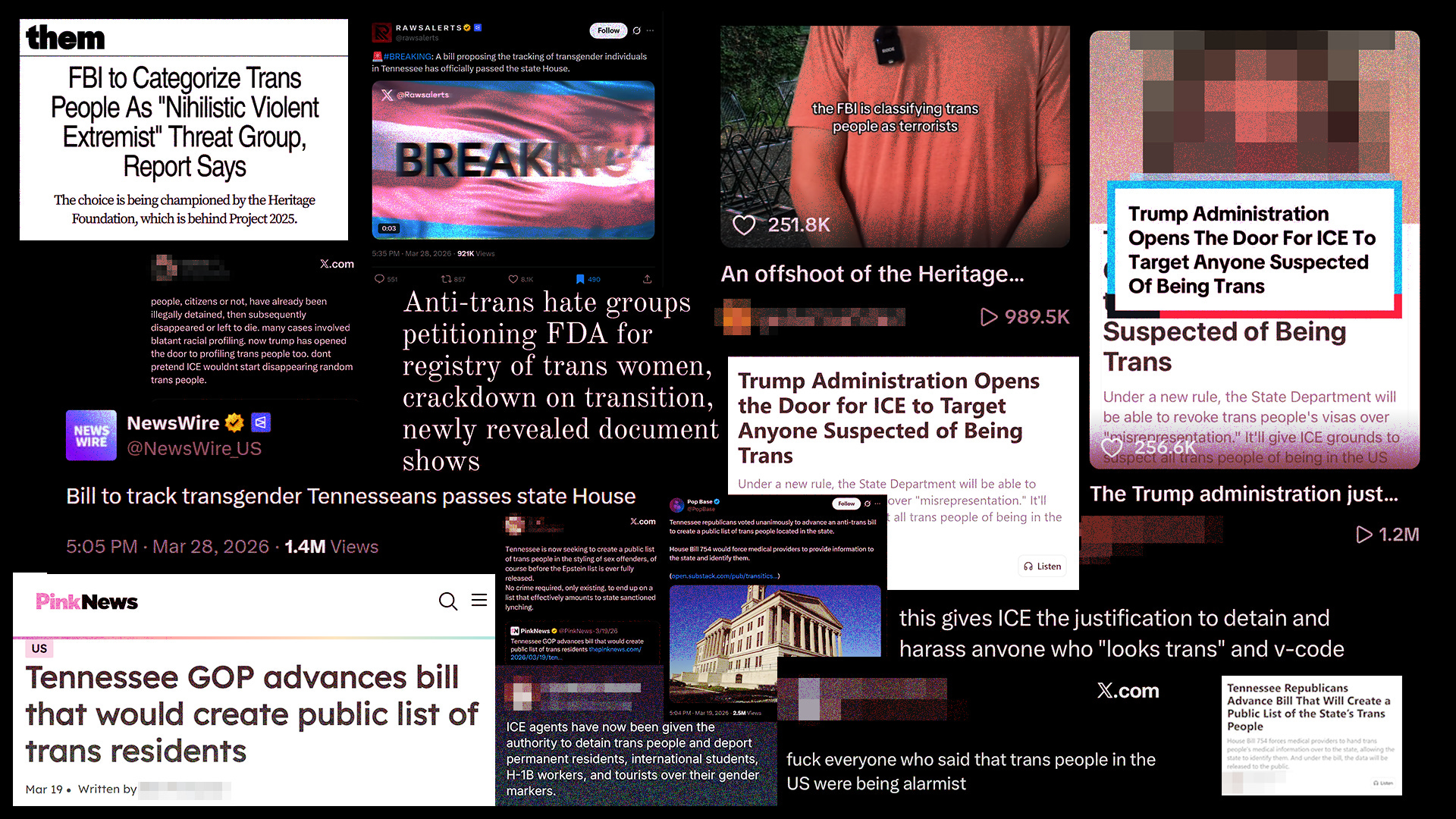
[Psychologist’s note here: If you are feeling surprised that people would believe any of that and be so affected by it, you need to understand that people who are spending a lot of time in “doomer” corners of the trans internet (which is a growing segment of the trans internet) see this stuff repeated over and over again, with links that make it seem like the information has more backing than it really does. It is a documented psychological phenomenon, called the illusory truth effect, that people are more likely to trust and believe statements after repeated exposure. It is also very important to understand that this is happening while the Trump administration and many state and local governments are also doing actual bad things to the trans community and causing real harm that is largely being ignored. So there is a level of hypervigilance at play here, as well.]
What Keeps the Trans Doom Clickbait Economy Going?
Much like every other systemic problem, I am not inclined to be particularly critical of individuals who are participating in this, but of the systemic forces that promote their participation. This is probably why I appreciated Davis’ work on this so much, as they really dig into the how and why of this whole thing instead of critiquing individuals.
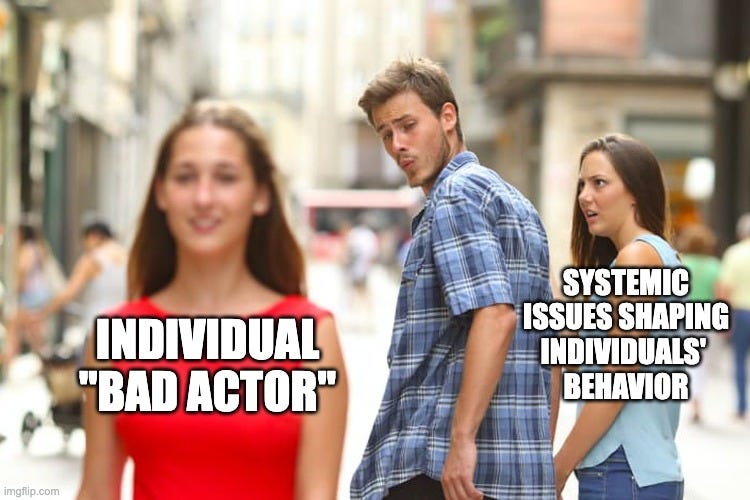
Davis points out that the lack of meaningful coverage of (and trans journalist participation in) trans news in historically-trusted mainstream outlets has left a gap in which people must rely on independent journalists to keep up with what is happening politically regarding trans people. While this is not inherently bad (yay independent trans journalists), it does require that news consumers vet individual sources, versus having a go-to broader source they can trust (i.e., The Guardian, which I love for all things BUT the trans news it frequently ignores). There’s a sort of vetting fatigue that happens here, and people start consuming news from unvetted sources. This is encouraged by platforms like Substack — ever driven toward profit for their investors — which push algorithmically-driven stories from content creators users don’t even follow in their feeds. Davis actually doesn’t get into that part — the vetting fatigue and diffusion of trust to anyone writing about trans stuff. That’s just something I’m seeing in myself and my clients.
What Davis does get into is how even smart and thoughtful journalists are nudged repeatedly by these platforms and their own need for financial sustainability to create more sensationalized posts.
Independent news sites and Substack style blogs have to build an audience and generate traction to stay operating. Turns out thousands of people constantly freaking out creates high social media engagement! This creates a loop where trans [doom] fearmongering boosts social media engagement, which further encourages more irresponsible clickbait framing.
Those who are successful may slowly develop a new class position which then needs to be maintained. Financial incentives may even pressure journalists who have done good work to fall back on panic driven engagement bait to attract new traffic.
I’ll tell you that I have wrestled with this incentivization to create alarm myself. For me, it comes mostly in how I choose what to title posts. I write titles with a critical question in mind: How can I get more readers to check out this post? I want to get my message out there and as I mentioned recently, I am trying to increase the number of paid subscribers here, so certainly that is bumping around in my brain even as I try to quiet its influence over my writing decisions. Substack encourages this by promoting “title tests” where you randomly assign one of two different titles to email subscribers and see which title gets more clicks. I have mostly resisted the urge (as far as I am consciously aware) but one must assume that a headline that generates alarm and/or anger is going to fare better than a more neutral one even if the neutral one is more accurate and encourages more thoughtful engagement.
Another place where there is incentivization to create alarm is social media. Davis discusses this:
Social media both amplifies and distorts already misleading claims, turning news into a massive game of telephone, and the siloing of certain users and platforms makes countering misinformation difficult. The social media economy carries certain incentives, for the producers of panic bait that could be attention, status, and money.
Monetized news aggregation accounts like “NewsWire,” “PopBase,” and the Polymarket powered “RawsAlerts” have figured out that trans [doom] posting is a cheat code for high engagement. But the consumers of panic also stand to gain something, catharsis, justification for their actions (or lack thereof), as well as attention from fellow consumers. Panic produces helplessness, but helplessness can actually be cathartic for the individual. It’s not helpful for people currently in the most danger.
Again Substack promotes this. When you publish an article on here, it creates images for social media. They used to be pretty bland and to me used graphic design choices to suggest reputability and trust, more like something you’d see in a newspaper. They recently expanded their offerings of social media posts, including one that to me seems specifically designed to elicit stronger alarm responses, with a title presented in large font, all caps.
I was recently criticized by a therapist for sharing one of these on instagram. She was right to criticize me and I was grateful (after my private defensiveness settled) for the opportunity to correct my behavior. I had intentionally opted for the more alarming Substack-generated image because I hoped to draw attention to the issue of the Texas mental health licensing boards offering guidance against affirmation of trans youth in certain contexts. I wanted people to read my substack where I talked about it with more nuance. What happened is people just started sharing the image I posted to instagram. And it was misleading in its incompleteness. I deleted it and posted a different image with a different style and a slightly revised headline so that when it was shared without the larger context of my full article, it wouldn’t spread misinformation. But y’all, it didn’t have nearly the same traction as the less responsible one.


Social media both amplifies and distorts already misleading claims, turning news into a massive game of telephone. -Garrison Davis
Some days later, I posted a positive update about the NASW of Texas advising clinicians to continue gender-affirming approaches. In a clear example of social media engagement being much higher for fear- and rage-inducing content, even the “boring” replacement version of my Substack image above about Texas mental health licensing boards (harmful) guidance was shared and liked more than three times more than my instagram post about the positive update. This, despite my pleas to spread the good news.
Another systemic driver of this whole mess is that people are addicted to social media apps. They’re spending way more time flipping through tiktoks and instagram stories and substack videos and tweets than they are reading the news. A lot of folks get most of their news exposure from social media. In general, the majority of Americans report getting their news from social media often or sometimes. And remember that mainstream news outlets aren’t covering trans news so trans folks are even more likely to turn to social media for critical information about what is affecting our communities.
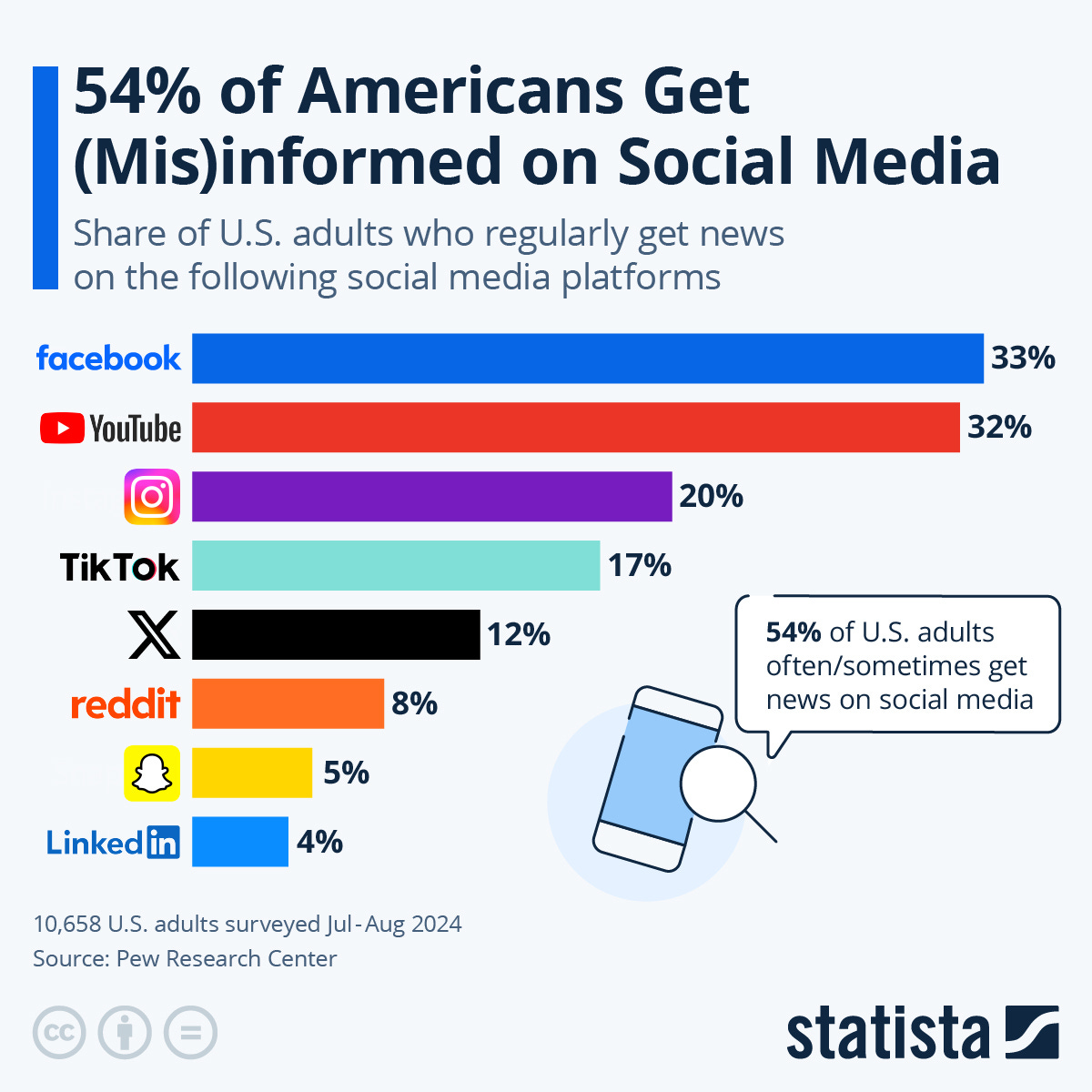
Note that the infographic above is from 2024 data. Pew Research Center’s report of 2025 data has even higher rates: 38% of Americans regularly got their news from Facebook, 35% from YouTube, 20% from Instagram, and 20% from TikTok. Even more concerning is when you look at the news behaviors of certain app users: 55% of TikTok users in 2025 said they regularly got their news from the app.
We are motivated to lift this stuff up because we want to warn and protect people, we want non-trans people to take notice and show us they care, we want to encourage resistance, and we want to feel like we’re doing something. Unfortunately, …participation in the trans doom clickbait economy is counterproductive to each of those goals.
Finally, I think it is important to remember that a lot of people participating in the trans doomerism ecosystem want to help trans people. Certainly there are the folks intentionally or more subconsciously promoting distorted news/interpretations to generate more engagement and thus money. But a lot of the inaccurate articles being written and posts being shared are coming from folks in or adjacent to the trans community who are genuinely worried for us. We are motivated to lift this stuff up because we want to warn and protect people, we want non-trans people to take notice and show us they care, we want to encourage resistance, and we want to feel like we’re doing something.
Unfortunately, as I get into in the next section, participation in the TDCE is counterproductive to each of those goals.
The Impacts of the Trans Doom Clickbait Economy
The danger of uncritically engaging with trans [doom] clickbait is that it reduces the worthwhile process of “staying informed” to being in a state of constant doom and feeling hopeless against an unstoppable enemy. -Garrison Davis
In Davis’ original post, they note the following impacts of this mess:
Doomerism and pervasive hopelessness and/or fear among trans people and the people who love us
Inaccurate belief that everything online or negatively reported about threats to trans people is false
Reduced “ability to accurately assess and respond to very real threats”
Trans people least under direct threat hoarding resources and retreating (because they believe themselves to be facing imminent serious threat) and/or succumbing to overwhelm when they otherwise could be helping people within and outside of the community who are actually being very materially affected right now
Ineffective forms of “resistance”
I will add to this list very real impacts on mental health, extending from the combination of pervasive hopelessness, frequent panic, and isolation that Davis points out.
Let’s get into each of these briefly:
Impact #1: Doomerism and pervasive hopelessness and/or fear
Belief in amplified reports of the threat to trans people makes it feel to many that we are facing widespread persecution beyond what is possible to resist. As Davis put it in their article, many trans folks feel that we are up against “an unstoppable enemy.” To be crystal clear, there are very real anti-trans efforts and implemented policies at the federal and state level. I certainly believe trans people are less safe in America today than they were two years ago — though here we must also be very careful to understand how our geographic location and other intersecting identities and life experiences shape the danger we each face as trans people and how MAGA era shifts have impacted that.2
But even in this serious reality of anti-trans oppression and violence, most of us are not facing circumstances as dire as these headlines and TikToks and our emotional brains are making out, and critically, there is not only lots of room for ongoing resistance — there is also already lots of resistance happening. And I don’t just mean political resistance like efforts to run pro-trans candidates and protest clinic shut downs (which are great), but also efforts to build alternative structures of care and connection to replace the institutional support we are losing. Resistance in the form of developing ways to live meaningfully and as fully as possible alongside and in the face of this oppression. That is happening and there is room for more of it. The trans doom clickbait ecosystem makes the threats feel overwhelming and impossible resist and frankly wears us out so much that even if we see avenues of resistance we are too exhausted and burned out to imagine participating.
Impact #2: Inaccurate belief that everything online or negatively reported about threats to trans people is false
Another thing that is happening among both trans and non-trans people (though especially non-trans people) exposed to the TDCE is a sort of crying wolf phenomenon. Debunkable viral claims like the above mentioned example that ICE is targeting people who “look trans” and the example Davis also mentions of claims of upcoming total bans on adult gender-affirming care make people skeptical of any time the trans community tries to bring awareness to threats against us. These distortions give fuel to the fire of unfair accusations that we are overreacting when we express despair and fear and demonstrate material impacts of the many real threats and actions against our communities.
Impact #3: Reduced ability to accurately assess and respond to very real threats
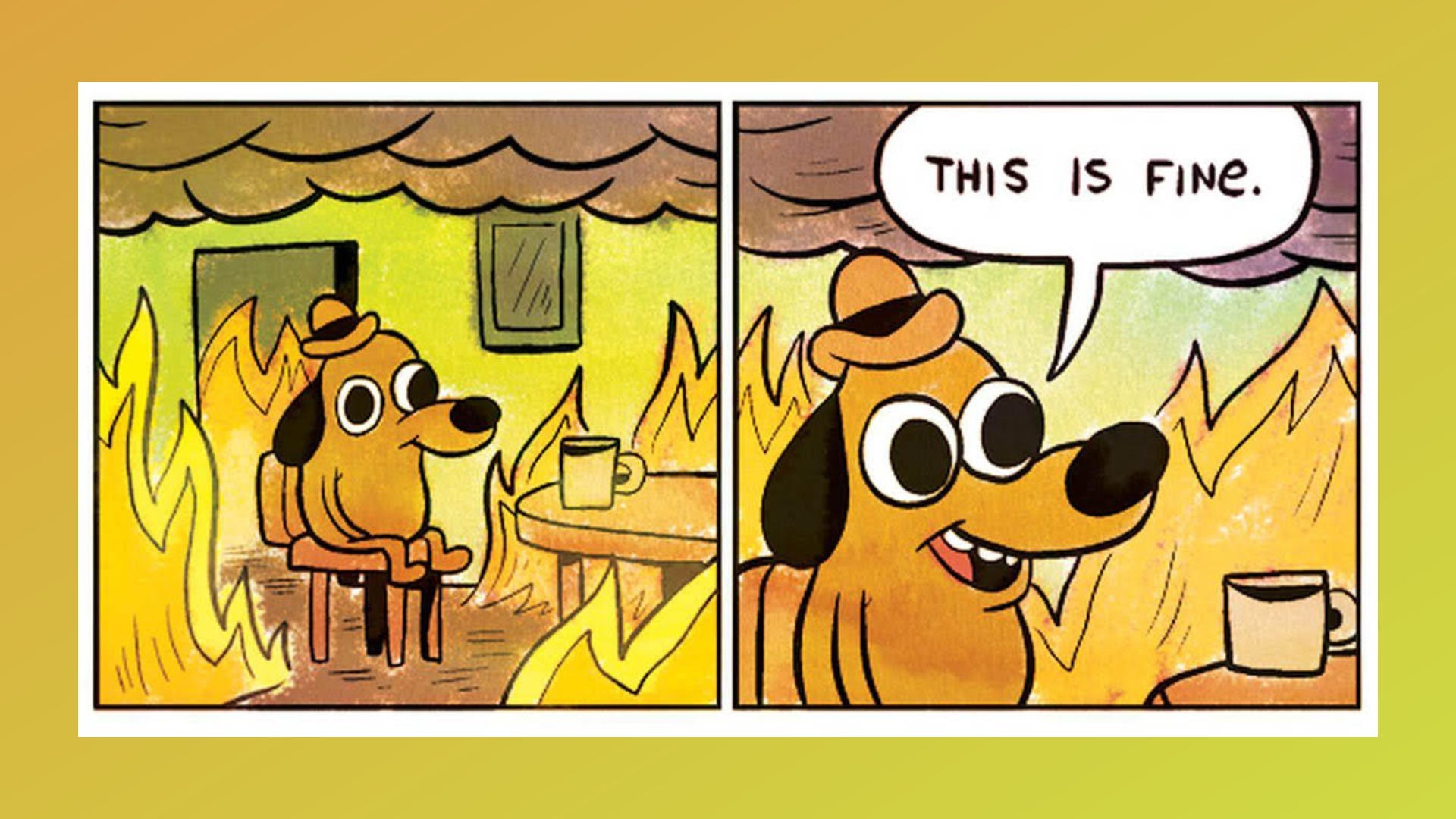
Driven by hopelessness that causes a nihilistic checking out (à la “this is fine”), burn out from hyper-reactivity and prolonged states of panic and despair, and skepticism of any alarms from the trans community that something bad is happening, the downstream effect of the trans clickbait economy is that we are losing capacity for engaging in actual threat assessment and meaningful response. Ironically, the drive to rile people up to action is likely contributing to more inaction.
Impact #4: Trans people retreating from needed contributions to resistance efforts and people who are under more threat
This is a big one for me. Trans doomerism often inadvertently encourages a kind of resource-hoarding and retreat from meaningful and much-needed action. Trans people who are least affected are motivated by efforts to preserve our own safety at the cost of engaging to protect trans folks and others who are most being harmed and most likely to be harmed in the future. (This has actually been a longstanding issue in the trans community as more privileged trans folks have pushed for liberal political and academic/rhetorical gains that, while benefiting some trans people, have done little to nothing to change the material circumstances of more marginalized community members.) Davis explains how this phenomenon is currently playing out with regard to the TDCE very effectively (emphasis mine):
This whole discourse takes the focus away from the people most at risk of ICE which are undocumented immigrant workers. [A trans person]3 in Seattle with a 150k dollar tech job is not at high risk being detained by ICE. Believing otherwise prohibits people who are actually safe and secure from using their wealth and status to support others who do not have the same safety provided by status or wealth, whether they’re transgender, an immigrant, or both.
Misleading articles and the larger panic driven information economy encourages people with financial or legal security to be scared into paralysis because they believe that any amount of opposition to the government will result in being disappeared to a concentration camp. This justifies a retreat from the world by framing it as safety, allowing one to focus on maximizing their own power and wealth to achieve security.
Impact #5: Ineffective forms of “resistance”
As Davis notes, when we re-post an image or respond to a TikTok or share a Substack, “posting about perceived danger is essentially viewed as a form of activism.” As others have repeatedly noted, posting on social media feels like we are doing something political, but in most cases has little actual impact, both in terms of meaningful consciousness raising and political change. Essentially, we achieve a false sense of action by participating in social media political discourse and spreading trans doom headlines.
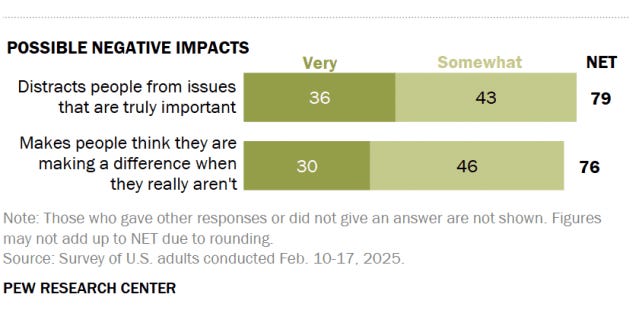
And it’s not only that it’s not making a difference, it’s likely taking away from opportunities to build movements of actual, durable action. Katherine Cross, a PhD Candidate at University of Washington’s Information School and author of the book Log Off: Why Posting and Politics (Almost) Never Mix, explains:
Social media provides a lot of momentary, individual emotional satisfaction, and it’s easy to mistake that for politics… A lot of internet discourse about politics is about venting, the desire to feel heard. It’s very therapeutic. But while that may have some value, in a limited sense, it is deeply antithetical to real politics, because politics is never truly about the individual: It’s about the collective, the polity. But social media’s prioritizing of individual emotion is anathema to real organizing.
If we spend our limited time locked into social media, we don’t have time for participating in and/or building collectives that could lead to real change, and as Cross points out, we get overly invested in our individual emotional catharsis (and in some cases performance of change-making), which detract from value systems that motivate collective action.

Finally, doomerism itself is really counter to effective change efforts. If you search the internet for “doomerism” you will find a lot of critiques discussing how doomerist mindsets both create a nihilistic view that demotivates seeking out opportunities for resistance/change-making and overwhelms folks in ways that destabilize us so we essentially aren’t well enough to resist (i.e., “flooding the zone”). I think it’s a pretty convincing argument that doomerism serves the far-right and fascist leaders that want to exploit and oppress us.
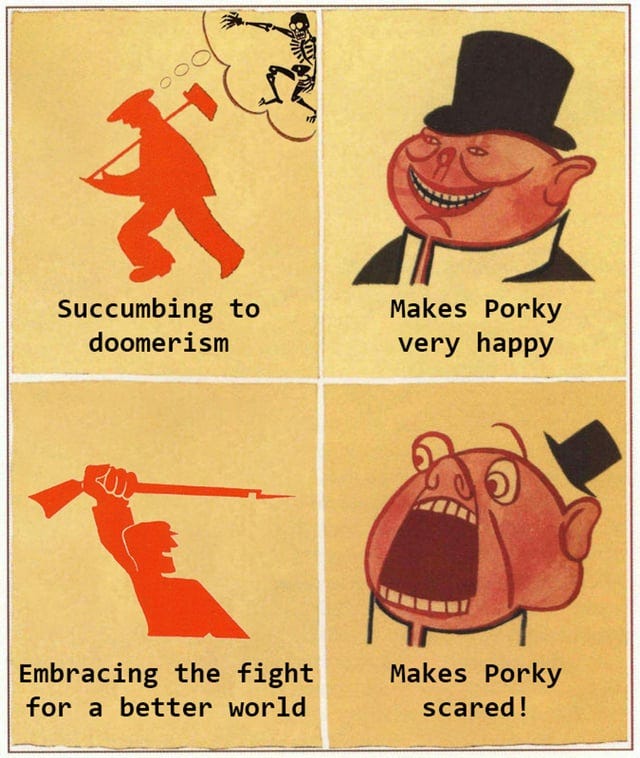
Impact #6: Our mental health is shit and trans people are struggling to flourish
As a psychotherapist to many trans people and people who care about trans people, I know all too well that the secondary impacts of the TDCE largely land in the realm of psychological distress and reduced well-being. (Also as a trans person with lots of trans friends.) We are not okay. And part of this is because unwellness is a perfectly reasonable response to confronting the real harm being done in this world. So some of this is unavoidable and a sign of adaptive emotions — if we aren’t negatively affected by horrible things, there’s actually something deeply dysfunctional about our body-mind. But some of this is not unavoidable. Part of the significant distress trans people and our accomplices are experiencing is because, as a result of all of these impacts of the TDCE: We are trapped in an experience of constant or near-constant catastrophe with a nervous system that is responding by staying firmly stuck in survival mode; we are overwhelmed by feelings of hopelessness and helplessness; and we are isolated from meaningful community connection and collective action.
This is going to feel obvious to read, but it needs to be stated and underlined: The trans person who spends three hours a day4 reading and reposting alarming and exaggerated trans news on social media is going to be suffering more mentally than the trans person who spends that time stocking the community fridge outside the LGBT center, working with community members on grocery distribution for undocumented immigrants in the area, and/or connecting with fellow trans and queer folks in a shared outdoor activity or online RPG. I am going to go so far as to say trans person A is going to be worse off than trans person B even if trans person A is white, lives in a safer state, and lacks other intersecting oppressions and trans person B is in a more hostile state and is more likely to experience marginalization due to intersecting oppressions (e.g., racism, ableism, poverty).
What I am saying is that I am witnessing mental health impacts of the state of trans oppression that have way less to do about actual direct impact of that oppression and more to do with how people are consuming (mis)information about and responding to that oppression.
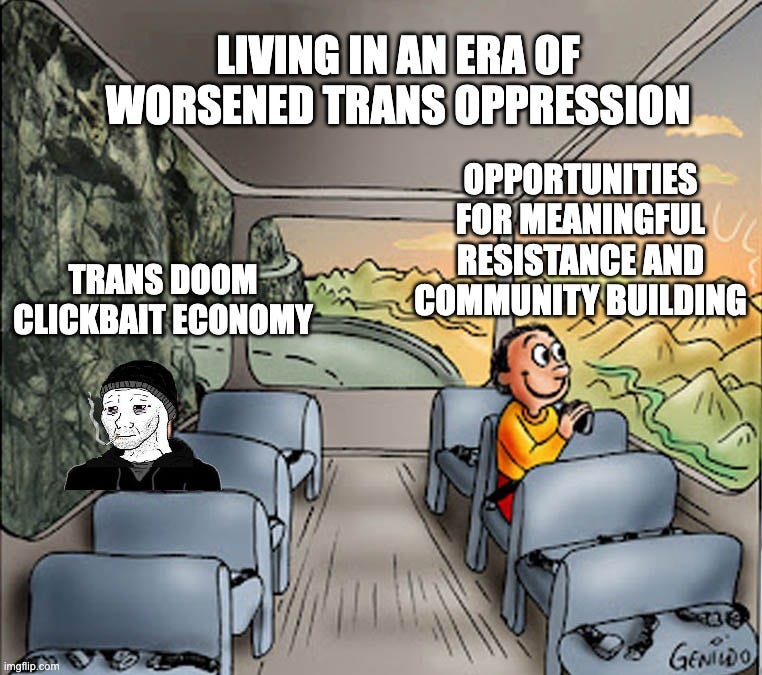
A note about this meme I created: I am playing off of an existing meme format in which two people on a bus have very different experiences of their surroundings based on what specific component they are looking at. There is the cliff face that (to some people - not me, rocks are cool) is depressing and cold and on the other side, there is the vista of a valley with lush green and a river, complete with a sunset. Importantly, both things are part of each bus riders context. In my metaphor here, the trans doom clickbait economy incentivizes an experience of the world that involves mostly or only looking at the worst pieces of what is happening to trans people (the cliff view to a non-rock-lover) and the most catastrophic speculation about what that can mean for the future. What is also happening in the world and could be a part of trans people’s lives are opportunities for meaningful resistance and community building (a beautiful vista just to the left of the cliff-viewers focus). The healthiest and most socially responsible “bus rider” is looking at both pieces of this reality and probably isn’t as giddy as the binoculars dude. But it drives home my point that as a consequence of the TDCE our experience is being shaped by an incomplete picture and leading to more suffering than is necessary.
Additionally, this to me is also about future dreaming. While there is room for speculation about potential catastrophic futures, the future is unknown and vast, and thus there is the possibility of wonderful futures for trans people — perhaps in the distant future, yes, and also maybe not as distant as we think, and also maybe even more distant — and there is room for just okay futures or kind of shitty or slightly wonderful futures, et cetera. Frankly the future’s unknownness and vastness deserve our respect and we are able to live more meaningfully when we hold onto the myriad possibilities for future us and those who come after us.
Fundamentally, we simply are not equipped as humans to flourish or even function stably if we only look to the worst pieces of our present moment and only hold belief in the worst possible outcomes. This is also just not an accurate way of taking in the whole picture of what it is to live as a trans person in this world, and what it has meant in the past, and what it could mean in the future.
How to Divest from the Trans Doom Clickbait Economy
The main point of this Substack article is to make the case that the trans doom clickbait economy is real and it’s having a negative impact. But I also don’t want to leave folks feeling their own sense of doom about this ecosystem. Because we absolutely can divest.
As Katherine Cross titled her book, the first thing you can do is log off. Spend less time on social media. Spend less time on TikTok, YouTube, Instagram, Facebook, Twitter, Bluesky, and yes — Substack. And when you do engage, do so with intention. Minimize the amount you just sit and swipe or scroll (and avoid it entirely if you can). The good that comes from passive algorithm-driven scrolling is far outweighed by the bad (even beyond the panic clickbait ecosystem). Do what you can to curate your feed. Unfollow people that tend to post panic- and rage-inducing content, even if you think it’s coming from good intentions. If you need help breaking your addiction (yes it is an addiction) to social media apps, I wrote an article that might help and I suspect there are many other resources out there:

My next piece of advice is to be selective about your sources for news and journalism and remember that no one under the current capitalistic and technofascistic systems is immune from sensationalizing and misleading content. As I mentioned above, I almost exclusively get my news coverage from a daily read of The Guardian, but they don’t report enough on trans-related happenings, quite frustratingly. I like Erin Reed’s work for trans news coverage, but even Erin and her reporters can over-emphasize the threat of certain events and play into TDCE. For this reason, I don’t subscribe to emails or notifications and I only go to Erin Reed’s substack (Erin in the Morning) when I’m well resourced to take in the reporting thoughtfully and somewhat critically.
Related, embrace healthy skepticism and engage critically when you see/read trans news, especially if you recognize it causing an emotional response in you. Here is Davis’ advice:
So then what is there to do? In terms of the trans [doom] information economy, don’t be afraid to openly question the legitimacy of certain reporting due to fear of backlash from “the community.” If it’s good reporting, it should be able to stand up to scrutiny. When you see a new story that triggers an emotional response, stop a moment before clicking share and find out where this claim is coming from. A reliable journalistic outlet? An independent publication? What other reporting has this publication done, has it been accurate? Who is the reporter? Are you familiar with their reporting? What else have they reported on? Is it speculative? Are there logical jumps without supporting evidence? Have other outlets reported this differently?
Davis also encourages folks to preserve most of their energy for clear and present harms. They advise that we resist pulls to “look so far into the speculative future” that we detract from what is happening and needs our attention right now. Though they don’t say this, this also reminds me of the saying “don’t borrow trouble from the tomorrow,” which an internet search tells me is actually biblical wisdom so… Anyway, the point stands. When we get too worked up by or invested in resisting a speculated future occurrence, we waste energy on scenarios that may never occur. It also keeps us focused on problems that because they are unknown and not happening right now we can never really address, instead of putting our efforts toward issues we can actually work to respond to now. This is not to say that there isn’t value in preparing for bad potential outcomes. I, for example, have a loose plan for how my family and I will leave this country if the time comes when we need to. I am recommending balance, so we don’t over-invest in preparations at the cost of addressing communities’ current needs, and discernment, so we don’t over-invest in preparing for unlikely futures.
Divesting from the TDCE also involves making an effort to seek out positive news, particularly about trans folks. Understand that the algorithm is likely to de-incentivize and bury positive stories, so we need to go looking for reporting on victories, resistance efforts, and other opportunities for celebration and joy. As readers of my Substack know, my go to for this is Ben Greene’s Substack Good Queer News and KB Brookins’ Substack Trans News That Doesn’t Suck. Both of these come into my email inbox and I try my best to read them. I also find queer and trans ecology to be a grounding source of hope, so while it doesn’t technically count as news I’m including it here. And my main source of this is Atmos magazine and their newsletters.
And get active in meaningful resistance, friends. As a commenter on the original version of this post noted, it helps restore empowerment and capacity in the face of threat to have a positive impact on communities in need (whether they are communities we belong to or not). We can also counteract the harm of the TDCE that encourages those of us in more secure positions to hoard our resources by directing our efforts toward people particularly materially impacted by fascism and other right-wing movements/government in our country. If you are not an immigrant, I recommend you get involved in efforts to support local immigrant communities (particularly our undocumented neighbors) and/or to resist anti-immigrant policies and actions. If you are not directly affected by the following, you might also look into specific actions and fundraising that supports trans youth affected by care bans, trans people in states where some insurance is not covering gender-affirming care, and trans people being affected by ID and bathroom laws in various states.
And finally, as a companion to logging off, find your people in person. This doesn’t have to mean trans people, though I do love when my community interests overlap with other trans folks. The more connected we are to in-person networks, the less we rely on social media networks to meet our emotional, relational, and political needs, and thus the less we invest in and are impacted by the TDCE.
So, in summary: You can divest from the trans doom clickbait economy by:
Reducing time spent on social media and avoiding passive engagement
Being selective about news sources
Approaching emotion-inducing news with healthy skepticism
Resisting pulls to emphasize speculative future problems over the harms of here and now
Seeking out positive news
Supporting people who are being materially harmed right now
Connecting to folks in person
Go team! We can do this.
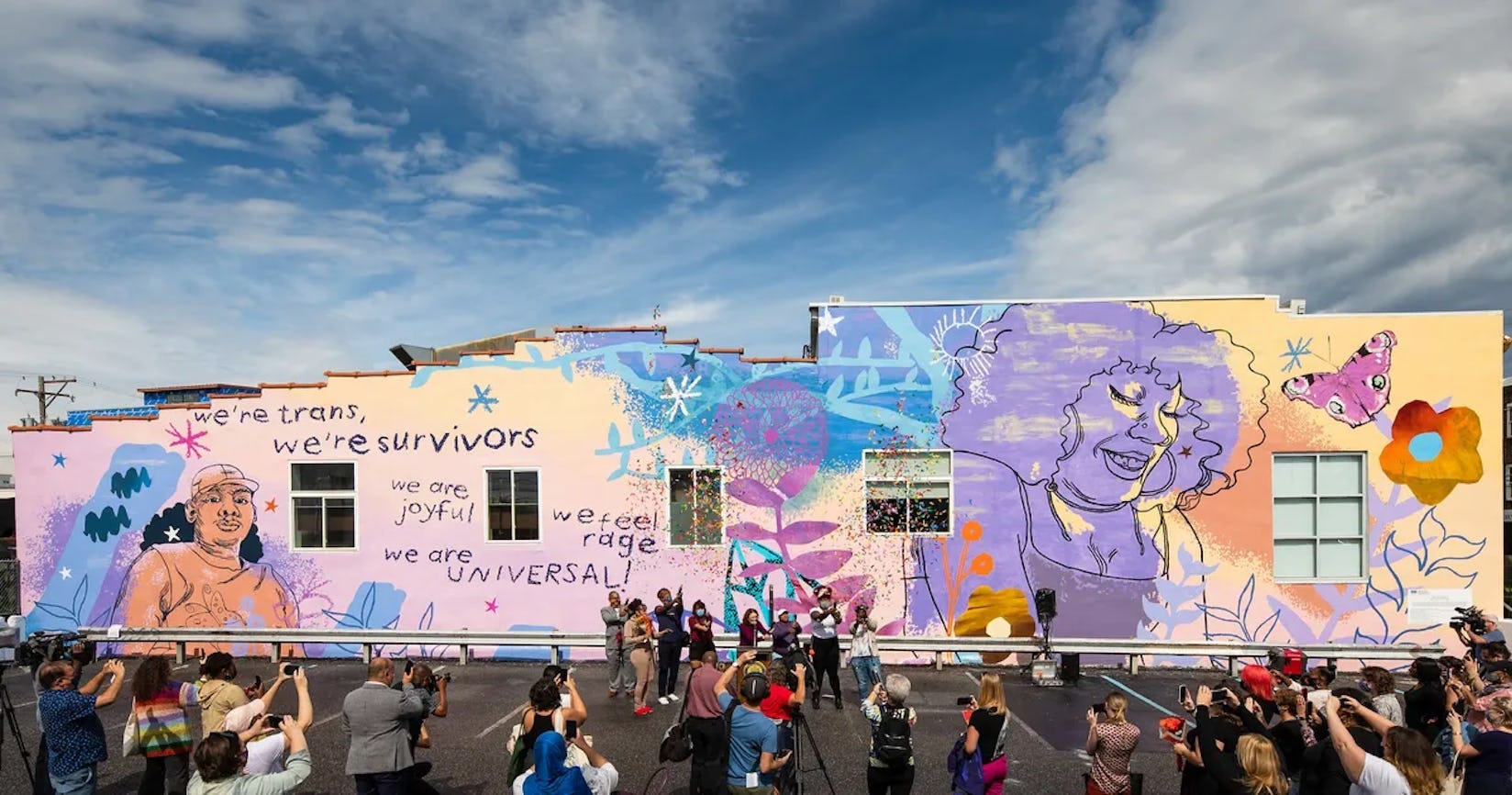
Gratitude again to Garrison Davis and their original reporting and commentary on what they called the Trans Panic Clickbait Economy. Their original post is here:
Addendum and Reflections on the Impact of This Article
I am writing this section on May 18, 2026. I have also made some revisions to the body of the article. So if you’re reading this after the evening of May 18, you are encountering a revised version.
After I first published this at the end of April, I received a swell of mixed feedback. On the one hand, this is the most liked and positively shared substack article I’ve ever written. On the other hand, I received a fair amount of critique. I did not start my substack to be a part of discourse, and when I launched Weathering the Storm (which was actually just titled Sebastian Barr’s Substack), substack as a platform was far less social media / tumblr-y than it is now. This is to say, that I’m not particularly interested in a back and forth rebuttal critiquing my critiques and won’t be doing that here. Also, some of the critiques made valid points of course!
I did learn from the responses that my article elicited that I was not making it clear enough for some that I agree things are bad and scary for trans folks and we need to make decisions and plans that take that into account. I completely rewrote my introduction to ground us in that set of facts. I also read critiques of the seeming casual use of the phrase “trans panic” in Davis’ term trans panic clickbait economy and my recycling of the term. I have revised this article to use the term “trans doom clickbait economy,” but I am not sure I’m satisfied with that term. While I do want to emphasize the manipulative and incentivized nature of the ecosystem, it has been pointed out that the term “clickbait” may be too pejorative and thus interpreted as an attack on the individuals who are generating, sharing, and engaging with the misinformation content I’m concerned about. If I revise further, I may use a new term altogether.
I was also reminded from the response to my article that our community is really hurting from the marginalization and invalidation we’ve been experiencing. My first draft of this essay included a bit that was never published on how strange it was to be writing a piece where I contend with misinformation spreading through trans networks that amplifies and distorts the threat to our communities, given that I have spent years sometimes being the sole source of validation to trans clients that things are as bad as they think and that the (usually cis) people around them dismissing their concerns are wrong. If I am doomerist about anything its AI and big tech, so a part of me says of course the impacts of this marginalization and gaslighting have been exploited at further cost to our communities.
I also want to stay humble. To use the example from Davis’ piece that I get into briefly above, maybe ICE will use these precedents in the future to go after trans folks just for being trans. I would never promise people that there is a limit to the pain the Trump administration is willing to inflict on trans people. (I do suspect there is limit to what they can achieve as a rather dysfunctional administration and movement and I mostly believe there is a limit to what the general public will tolerate… though I don’t want to test the latter in particular.) The truth is that I am not a political analyst or an expert in genocide or oppression. And there is clearly an ecosystem of amplified panic- and rage-inducing headlines and a suppression of more positive and reassuring news and perspectives. And there are demonstrable downstream effects of this on our wellbeing and the ways we are and aren’t resisting. When there are real threats, we have to be even more discerning of the information we are taking in and responding to because the stakes are legitimately so high.
And again, I believe in us. At the end of the day so much of what I do and how I approach my own life, my work, and my community involvement grows from a deep belief in trans people and our capacities. I believe in our capacity to resist and survive this effort at our subjugation. And I believe in our capacity to hold multiple truths at once and not be shaped by tech oligarchs into a life lived mostly in doom and dread.
Thank you to everyone who has engaged with this piece thus far, including those who helped me see its weak spots and those whose positions I disagree with but clearly come from a shared commitment to the survival and wellbeing of trans people.
Ways to Support My Work:
I’ve seen they/them and they/he listed for the pronouns Garrison wants people to use and I could find no public declaration of identity, so I’m sticking with they/them/theirs for this article.
Which is to say that a white trans man assumed by strangers to be cis who has a graduate degree and earns a wage above the poverty line who is living in Massachusetts in a hetero-looking partnership is only slightly less materially safe on a day-to-day basis than he was before Trump 2.0. This matters.
In their original piece, Davis uses the name “Lilith” as a kind of in-community jab that upon reflection (and a call out/ call in) found unnecessary. It also overly gendered the critique away from trans men who are as a whole safer in our country than trans women.
Your point about trans persons A and B hits home for me. I was struggling immensely until I put my feet to the pavement and started volunteering in my community. Doing so gave me
1) a much-needed dose of perspective - things may be shit in all directions but I have a great deal of things to be grateful for.
2) a sense of purpose that drives me to keep getting out of bed every morning, keep showing up for work, keep taking my medications.
3) an outlet for the inevitable feelings of rage and helplessness that manifest. You gotta get those feelings out. Exert control of something, throw your anger into a task that helps your community
4) a sense that I am not alone and that we will get through this together.
Too many people think that activism means doing things you don't like/aren't good at/aren't comfortable with, and that they require you to do something big to be meaningful. Neither of these are true. You can find small things within your power to do. I am a conflict-averse hermit. Phone calls are terrifying, I don't wanna call my reps or canvas for votes or go to protests. But I'm pretty damn crafty, and it turns out people will pay for those crafts. So now I've partnered with a local mutual aid org and I'm making jewelry to raise money for bus passes for trans people in my city. Sometimes you have to think outside the box but there are things you can do!
Absolutely 😁 I’ve been deliberately trying to write positive articles for three years and got the most likes, views, and new subscribers ever for one called The Trans Monster Trope at a Time of Trans Genocide.
I maintain it's still quite upbeat and praises community, conscious discourse around consent, and so on but it was my most clickbait title ever.